Varieties of Discourse: On the Study of Organizations through Discourse Analysis
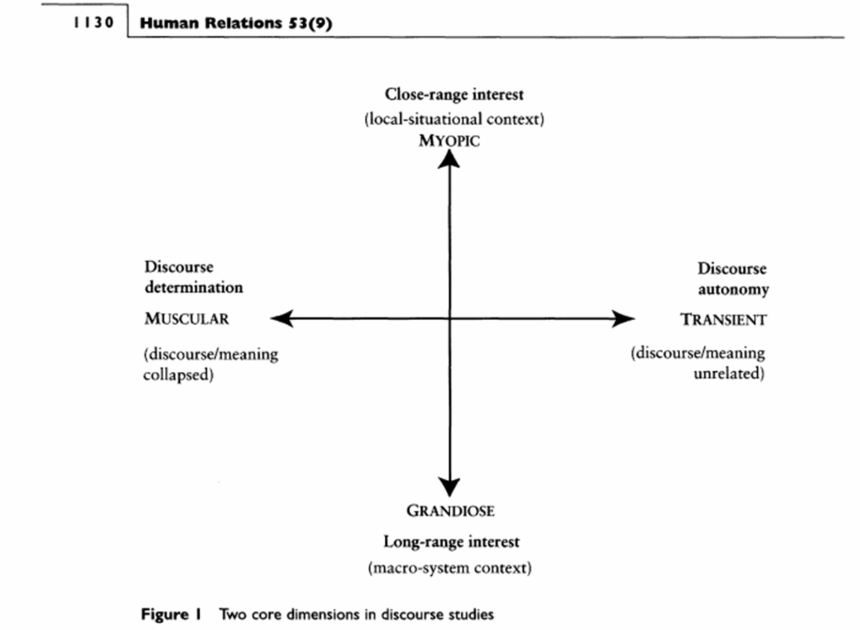
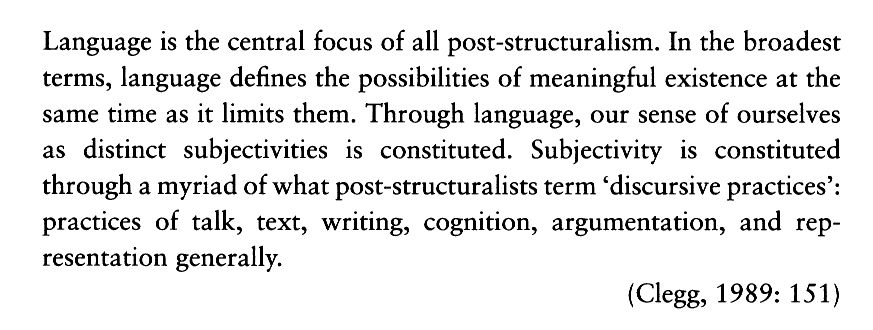
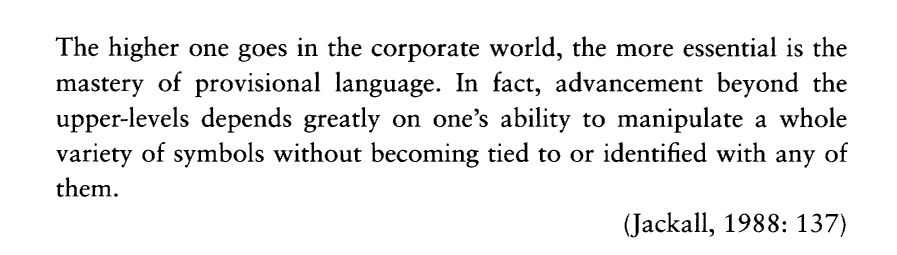
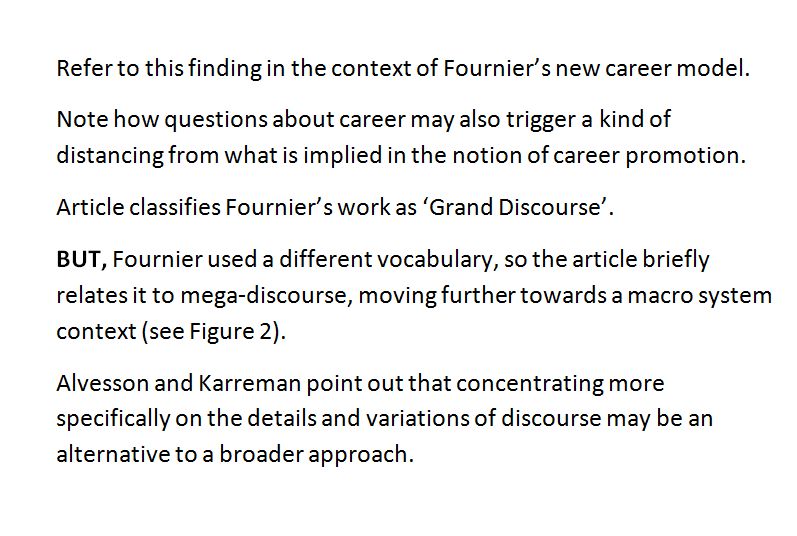
Alvesson and Karreman (2000) quote Clegg (1989) and Jackall (1988)at length to illustrate the weight given to language in discourse analysis
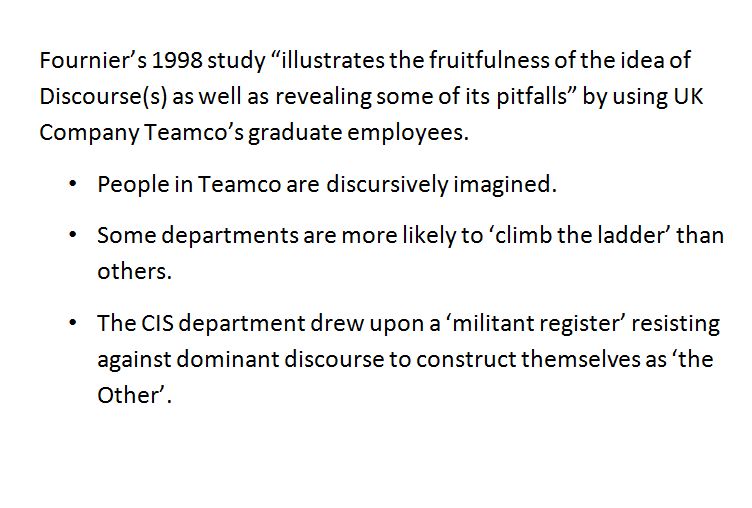
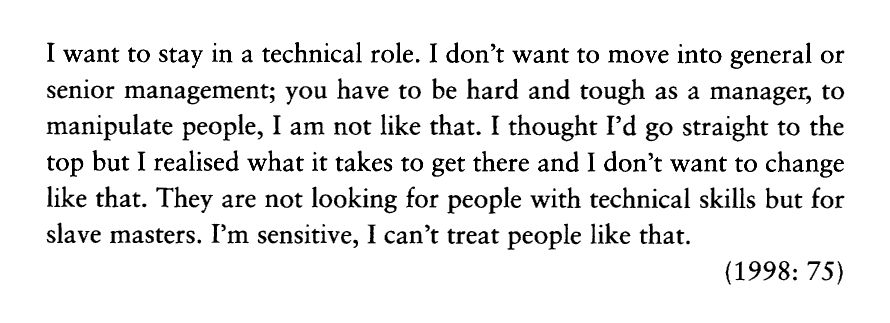
This direct quote from a participant in Fournier's study shows a position which is neither part of the dominant discourse nor marginalized, but instead occupies its own position
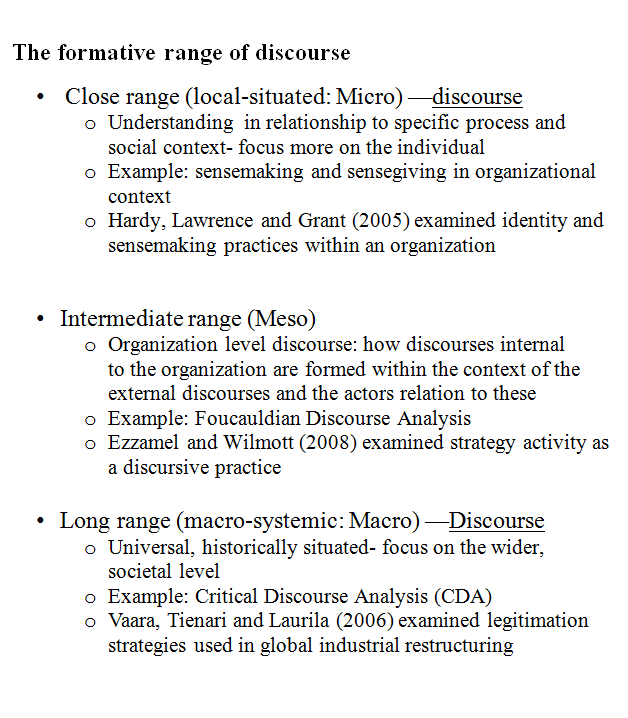
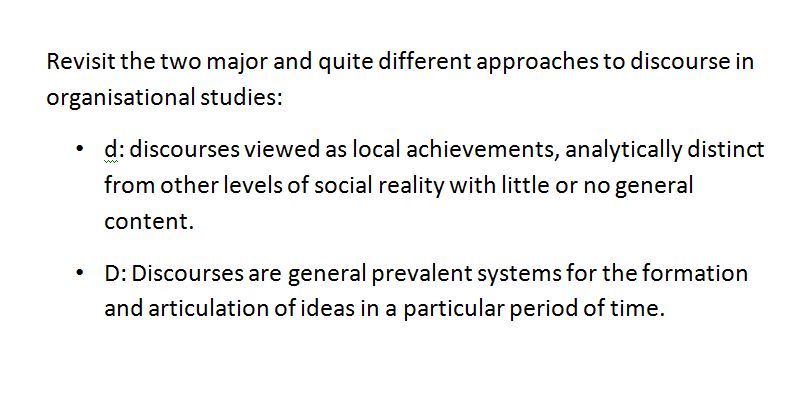
Big 'D' discourse? Critical Discourse Analysis
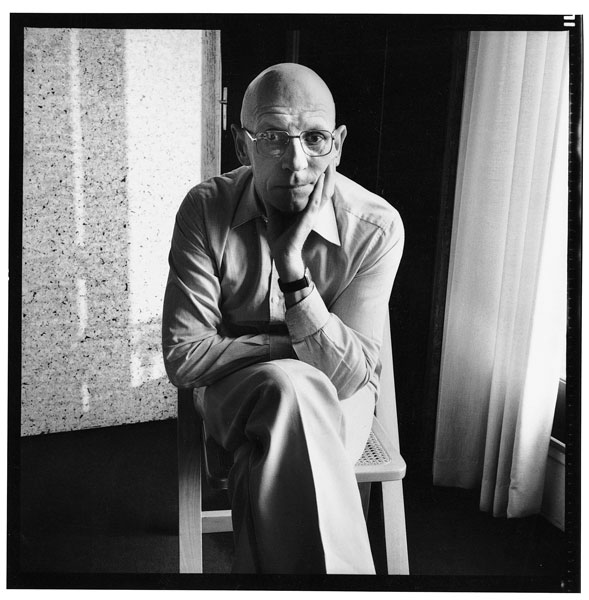
Michel Foucault: two ways of investigating discourse rooted in philosophy
o Archaeology—formulation and transformation for discursive practices
o Genealogy—forces and relations of power connected to discursive practices
Power relations between discourse and the dynamics of social systems
“We must not imagine a world of discourse divided between accepted discourse and excluded discourse, or between the dominant discourse and the dominated one; but as a multiplicity of discursive elements that can come into play in various strategies”
(Foucault, 1972, p. 100)
Applying Critical Discourse Analysis in Strategic Management Research. Phillips, Sewell and Jaynes (2008).
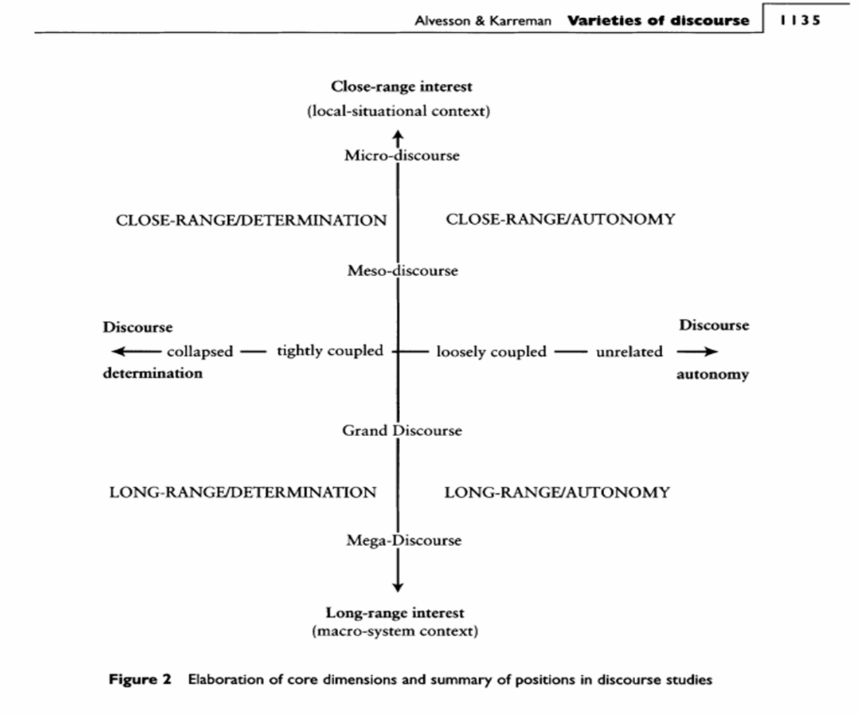
Using Fairclough’s (2005) Three Levels of Analysis in Critical Discourse Analysis: Level of social context (MACRO) Level of discourse (MESO) Level of text (MICRO)
They focus on strategic change in a large banking and financial services institution.
They examine the relationship between language and the formulation and implementation of strategy—strategy as a system of shared meaning, strategy as text and talk, and strategy as truth.
MACRO: "the recurrent terms we identified—such as changing environment, bureaucracy, and culture—were intentionally invoked to depict Big Bank as an anachronistically paternalistic and inflexible organization that was ill-equipped to deal with the competitive demands of today’s financial services sector."
MESO: "Transform Champion. This was someone deemed to be ‘‘emotionally intelligent,’’ a quality that was disaggregated into ‘‘self-awareness,’’ ‘‘self-management,’’ and ‘‘motivation.’’ Champions were also expected to demonstrate high levels of ‘‘leadership’’ through ‘‘social competence’’ and ‘‘personal mastery’’ while being ‘‘talented and values-driven.’’"
MICRO: "we also observed the effects of appropriation or covert resistance in the form of the ironical narratives (e.g., individuals who found the discourse of Transform persuasive and used it between themselves but reported a lack of any real support from Big Bank when they tried to ‘‘live the Transform life’’).